Learning to Say No: Personal Boundaries, Respect and Communication Through Play
When does a game stop being fun? How do we recognise when someone has crossed our personal boundaries, and why is it important to be able to say “no”?
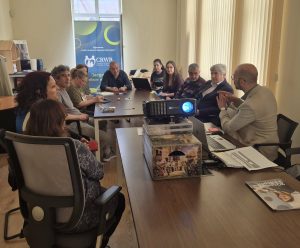
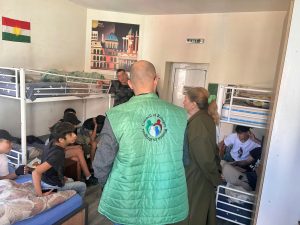
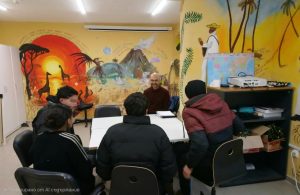
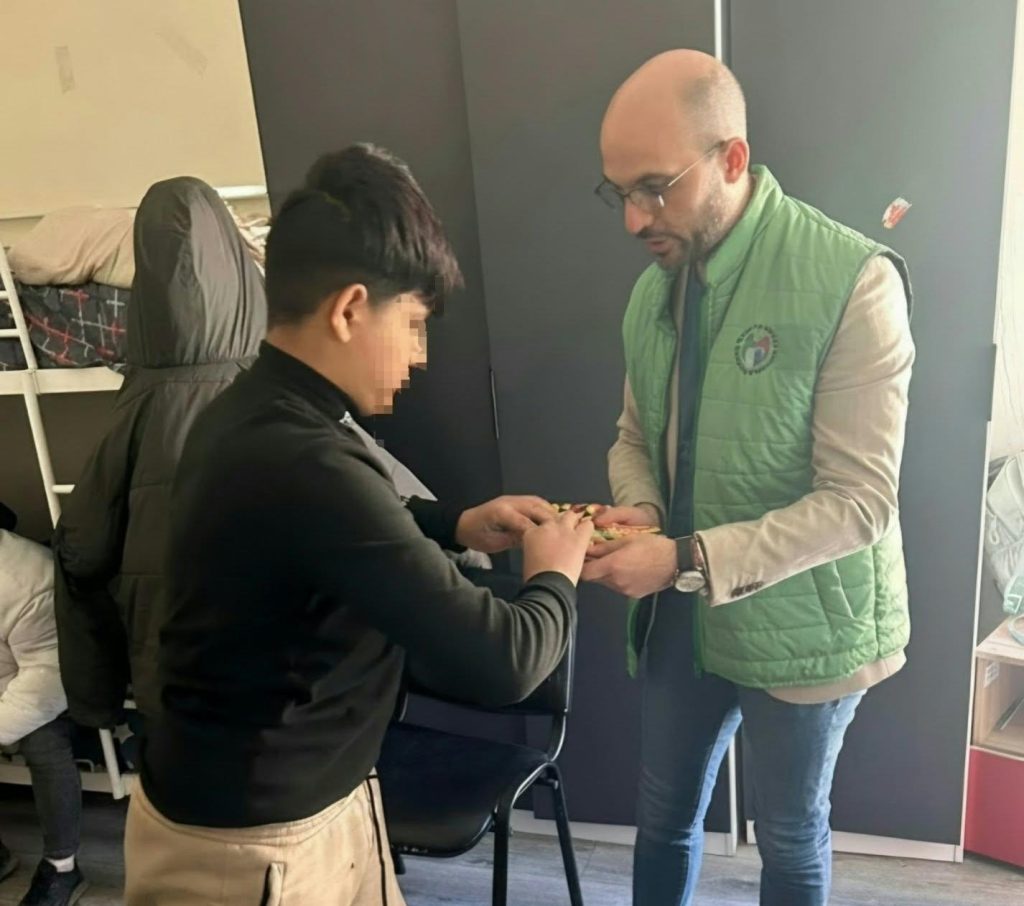
These questions were explored during a group workshop with unaccompanied refugee children, organised by the Council of Refugee Women in Bulgaria (CRWB) at the residential care centre on 78 Tsar Simeon Street in Sofia, as part of the SAVE – Speak Out Against Violence project.
The session focused on personal boundaries, group relationships, and conflict management, using play as a starting point for discussing respect and the way we interact with others.
The workshop began with the familiar game “Musical Chairs.” While music played, participants moved around the chairs, and when it stopped, everyone had to find a seat. With one fewer chair than participants, the activity created moments of competition, quick reactions, and the need to consider others.
Beyond movement and fun, the exercise offered an opportunity to observe how children respond to competition, frustration, and disagreements.
During the game, situations emerged involving respect for personal space, turn-taking, and the difference between playful behaviour and actions that may negatively affect others.
After the game, the facilitator encouraged participants to reflect on their experiences. Children were invited to consider their own reactions and how their actions could affect other group members.
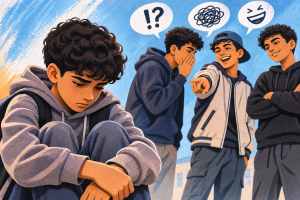
The second part of the workshop focused on personal boundaries and the right to say “no.” Participants were asked to think about actions or situations they would not want others to impose on them and how they could express their boundaries clearly and respectfully.
Some children found it challenging to put their personal boundaries into words. Through guiding questions and support, the discussion helped connect their experiences during the game with broader themes of respect, consent, and communication.
By the end of the session, participants were able to identify concrete examples of personal boundaries and discuss situations in which these boundaries should be respected. The conversation also highlighted the importance of continuing to explore this topic in future group activities.
The workshop emphasised that learning to say “no,” recognising our own boundaries, and respecting those of others are essential elements of building safe and positive relationships.
Such activities provide unaccompanied refugee children with opportunities to develop communication, emotional self-regulation, and constructive conflict-management skills through practical experiences and shared reflection.
The activity was implemented as part of the SAVE – Speak Out Against Violence project.
This project has received funding from the European Union’s CERV programme under Grant Agreement No 101138279, the Daphne-CHILD programme with Eurochild and Terre des hommes.
Eurochild plays a leading role in the project. For more information, visit: https://eurochild.org/.
Funded by the European Union. Views and opinions expressed are however those of the author(s) only and do not necessarily reflect those of the European Union. Neither the European Union nor the granting authority can be held responsible for them.