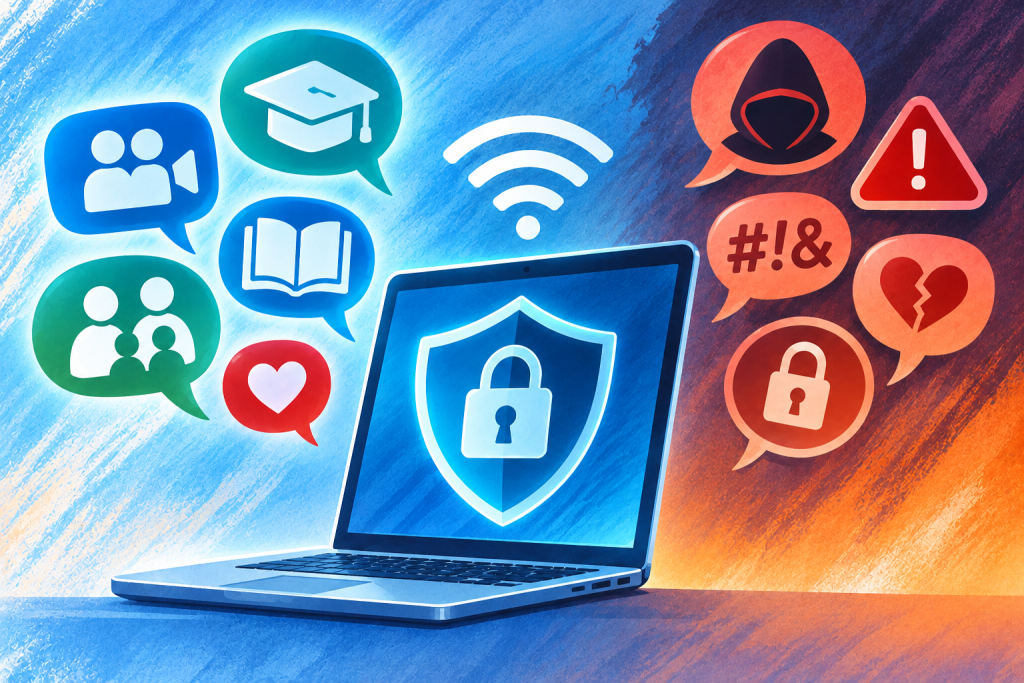
Can the same place that helps us stay connected with our loved ones also become a source of danger? How can we recognise online risks, and do we know how to protect ourselves?
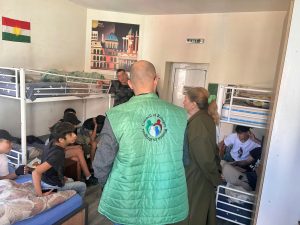
For many unaccompanied refugee children, the internet is much more than a source of entertainment. Social media and messaging applications allow them to stay in touch with family and friends, access information, learn new things, and navigate unfamiliar surroundings. The digital world can provide a sense of connection and belonging, especially when they are far from home.
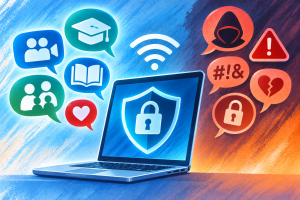
However, the same online spaces that offer opportunities for communication and support can also expose children to serious risks.
Cyberbullying, offensive messages, threats, and the sharing of personal information without consent are forms of violence that can affect children’s emotional well-being. Unlike face-to-face conflicts, online harassment can continue at any time, while harmful content can quickly reach a large audience.
Another concern involves contact with strangers who present themselves as friends or offer help, employment, travel, or other attractive opportunities. Such offers may sometimes conceal attempts at manipulation, fraud, or exploitation. Children without consistent family support and those facing uncertainty may be particularly vulnerable to these risks.
Recognising warning signs is an essential part of online safety. Requests for personal photographs, documents, passwords, or location details, pressure to keep conversations secret, and demands to meet strangers in person are situations that require particular caution.
Staying safe online, however, does not mean avoiding the internet altogether. It means developing the knowledge and skills needed to protect personal information, verify online content, recognise suspicious contacts, and use tools to block or report inappropriate behaviour.
Equally important is ensuring that children understand they do not have to face dangerous situations alone. Speaking with a trusted adult, social worker, or other professional can help them receive timely support and prevent further harm.
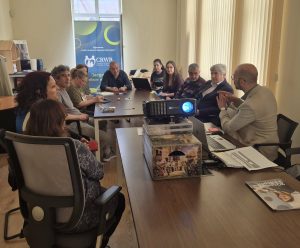
Through the SAVE – Speak Out Against Violence project, the Council of Refugee Women in Bulgaria (CRWB) emphasises violence prevention, awareness of children’s rights, and the importance of creating a safer and more supportive environment for unaccompanied refugee children.
Digital safety begins with awareness, but it is strengthened through trust, support, and the confidence that every child has the right to protection — both offline and online.
The project has received funding from the European Union’s Citizens, Equality, Rights and Values (CERV) programme under Grant Agreement No. 101138279, within the framework of Daphne-CHILD with Eurochild and Terre des hommes.
Eurochild plays a leading role in the project. For more information, visit: https://eurochild.org/.
Funded by the European Union. Views and opinions expressed are however those of the author(s) only and do not necessarily reflect those of the European Union. Neither the European Union nor the granting authority can be held responsible for them.